Rooted in Many Worlds: Attachment Styles in Multicultural Queer Relationships

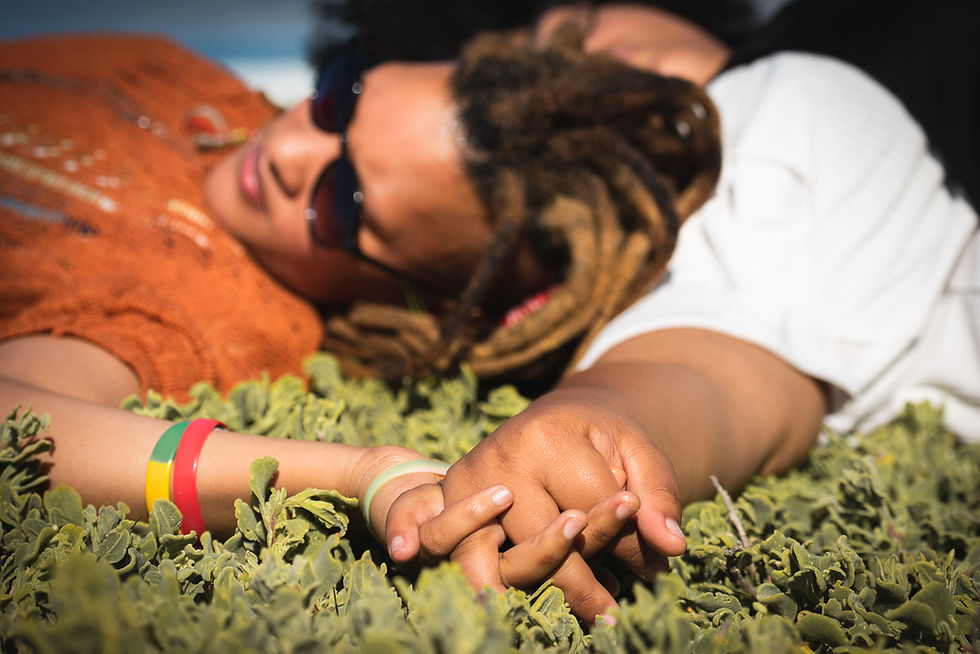
When two people fall in love across cultural backgrounds, they bring more than their personalities to the relationship. They bring inherited ideas about love, loyalty, family, emotional expression, and how much space is safe to take up. Add the layer of queer identity — which often involves navigating rejection, chosen family, and complex relationships with one's culture of origin — and you have a beautiful, layered, sometimes turbulent tapestry.
Understanding attachment styles in this context isn't just pop psychology. It's a lifeline.
What Are Attachment Styles, Really?
Attachment theory, originally developed by psychologist John Bowlby and later expanded by Mary Ainsworth, describes the patterns we develop in early childhood for relating to caregivers — and how those patterns follow us into adult relationships.
There are four primary attachment styles:
Secure attachment — You feel comfortable with closeness and interdependence. You trust that your partner will be there, and you don't panic when they need space.
Anxious (preoccupied) attachment — You crave closeness but fear abandonment. Small silences can feel like rejection. You may seek constant reassurance or become hypervigilant to shifts in your partner's mood.
Avoidant (dismissive) attachment — Closeness can feel threatening or suffocating. You may equate self-sufficiency with strength and struggle to ask for help or express vulnerability.
Disorganized (fearful-avoidant) attachment — A combination of desiring closeness and fearing it. This often develops in environments where caregivers were also sources of fear or unpredictability.
These styles aren't destiny — they're patterns. And they're far more nuanced when viewed through cultural and queer lenses.
When Culture Shapes Your Attachment Blueprint
Culture is not just background noise. It is the operating system through which we first learned what love looks like.
In some East Asian, South Asian, and Latin American cultural contexts, emotional restraint is a form of deep respect and love. A parent who sacrifices everything for their child but never says "I love you" out loud has communicated love — just not in a way that Western attachment frameworks always recognize. A child raised in that environment may develop what looks like avoidant attachment by clinical Western standards, but is actually a culturally fluent expression of love through action rather than words.
Similarly, in cultures with strong collectivist values, the boundary between self and family is intentionally porous. Decisions are made in community. Loyalty is expressed through presence and sacrifice. For someone raised this way, entering a queer relationship — especially one that a family may not accept — can create profound internal conflict: I love this person and I love my family. My culture says these two loves cannot coexist.
For someone from a more individualist cultural background, this may look like their partner being "enmeshed" or unable to set limits with family. But it is worth asking: whose definition of healthy independence are we using?
This is not to say that all cultural norms are equally healthy or that harmful dynamics should be excused by cultural framing. It is to say that context matters enormously when interpreting behavior in relationships.
The Queer Dimension: Attachment Interrupted
For many queer people, the attachment journey is uniquely complicated — regardless of cultural background.
Coming out, or living in the closet, often means experiencing chronic low-level rejection or hypervigilance from a young age. When a child learns that a core part of who they are is unwelcome — or must be hidden — it affects how they attach to caregivers and, later, to partners.
Consider:
A queer person who was rejected by parents upon coming out may carry a deep-seated anxious attachment pattern: People leave when they see all of me.
Someone who had to survive by concealing their identity may develop avoidant tendencies as a protective strategy: If I never need anyone, I can never be hurt.
For queer people who experienced family violence or conversion pressure, disorganized attachment is common — love became linked with danger.
These wounds don't disappear when someone enters a loving queer relationship. In fact, the safety of that relationship can be precisely what allows those old patterns to surface.
And when you're in a multicultural queer relationship, you may be navigating not just your own wounded attachment history, but your partner's — shaped by an entirely different cultural and familial landscape.
Common Attachment Friction Points in Multicultural Queer Relationships
Emotional expression styles One partner may have grown up in a culture that values open verbal affirmation; the other in a culture where love is shown through action, food, sacrifice, or simply showing up. Without awareness, the first partner may feel unloved, while the second partner may feel their love is invisible.
Family involvement and loyalty What looks like "enmeshment" to one partner may be experienced as devotion and deep love by the other. Conversations about how much family is included in the relationship — financially, physically, emotionally — can activate attachment fears on both sides.
Conflict styles Some cultures encourage direct confrontation and resolution; others prioritize harmony and avoidance of open conflict. An anxiously attached partner who needs to "talk things out immediately" paired with a partner whose culture taught them to let conflict cool may feel like abandonment vs. flooding.
Queer acceptance within each culture One partner may come from a family or culture that has embraced their queer identity; the other may still be navigating hostility or silence. This difference in cultural safety can create an invisible divide in how each person experiences the relationship — one is loved fully in public; the other is still living a split life.
Chosen family vs. family of origin Many queer people, especially those estranged from family, have built rich chosen families. If a partner comes from a culture with strong family-of-origin ties, the respective weight given to chosen vs. biological family can become a point of real tension.
Ways to Support Each Other
1. Learn each other's attachment language — not just love language
Go deeper than "acts of service vs. words of affirmation." Explore why you need what you need. What did safety look like in your childhood home? What made you feel seen? What made you feel like you had to disappear?
This kind of conversation is intimate and sometimes difficult, but it is transformative.
2. Separate the wound from the person
When your partner withdraws, they are not necessarily abandoning you. When your partner clings, they are not necessarily controlling you. Practice the pause: Is this about now, or is this about then?
This doesn't mean ignoring real-time dynamics — it means slowing down enough to respond rather than react.
3. Hold space for cultural grief
For many queer people in multicultural relationships, there is grief embedded in the love story. Grief over family members who don't accept them. Grief over cultural identities that feel incompatible with their queer selves. Grief over the versions of their lives they imagined before they came out.
Do not rush past this grief. Do not try to fix it. Sitting with your partner in it is one of the most profound forms of love.
4. Resist ranking cultural values
There is a temptation in multicultural relationships to unconsciously rank one partner's cultural framework as more emotionally healthy or rational than the other's. This is especially likely when one partner has had more access to therapy or Western psychological frameworks.
Approach your partner's culture with genuine curiosity, not just tolerance. Ask questions. Read. Listen to how they describe their home, their family, their world.
5. Build shared rituals and a shared culture
Multicultural queer relationships are generative — they are in the business of creating something new. Over time, you will develop your own relationship culture: your rituals, your language for conflict, your ways of celebrating, your sense of chosen family. This is not a compromise between two cultures. It is something entirely yours.
6. Work with a therapist who gets it
Not all therapists are equipped to work at the intersection of queerness, attachment, and cultural complexity. Look for therapists who are explicitly affirming of LGBTQ+ identities and who have training in multicultural or cross-cultural therapy. Couples therapy can be especially valuable not for resolving crises, but for building shared frameworks before they're desperately needed.
7. Give each other cultural context, not cultural passes
There is a difference between I'm explaining this so you can understand me better and My culture means you can't challenge this behavior. Healthy multicultural relationships involve genuine curiosity about each other's cultural backgrounds alongside a shared commitment to accountability and growth. Culture explains; it doesn't excuse.
A Note on Intersectionality
Attachment in multicultural queer relationships doesn't operate in a vacuum. Race, class, immigration status, disability, neurodivergence, religion — all of these shape how we relate to intimacy, safety, and trust. A queer immigrant couple navigating documentation uncertainty is not just managing attachment styles; they are managing survival stress, which profoundly affects nervous system regulation and relational capacity.
Be humble about how much external stress affects internal attachment patterns. Sometimes what looks like an avoidant partner is an exhausted one. Sometimes what looks like anxious attachment is hypervigilance developed for very good reasons.
The Gift of Complexity
Multicultural queer relationships ask a lot of us. They require us to hold multiple truths simultaneously, to learn new emotional languages, to grieve and celebrate in stereo, to question assumptions we didn't even know we had.
But they also offer something extraordinary: the experience of being fully known by someone who came from an entirely different world — and choosing each other anyway.
Attachment healing doesn't happen in isolation. It happens in relationship — in the daily practice of showing up, repairing after rupture, and learning to trust that love can be safe.
You are building that proof, together, one brave conversation at a time.
If this resonates with your experience, consider sharing it with someone you love. And if you're navigating these dynamics in your own relationship, know that support exists — from affirming therapists, queer community organizations, and the quiet wisdom you and your partner are building, even now.


Comments